Finding the Perfect Cloud-Based Accounting Software for Your Small Business
Running a small business is a balancing act, juggling everything from sales and marketing to inventory and finances. Keeping track of all the moving parts can be overwhelming, especially when it comes to managing your finances. That’s where cloud-based accounting software comes in. It’s a game-changer for small businesses, offering a streamlined and efficient way to manage your finances, no matter where you are. But with so many options out there, choosing the right software can feel daunting.
Don’t worry, I’ve got you covered. I’ve been in the trenches, helping businesses navigate the complexities of accounting for years. I’ve seen the good, the bad, and the ugly, and I’m here to guide you through the process of finding the best cloud-based accounting software for your specific needs.
Understanding Your Needs:
Before diving into the world of cloud-based accounting software, it’s crucial to understand your business needs. What are your current pain points? Are you struggling with manual bookkeeping, having trouble managing expenses, or lacking real-time financial insights? Knowing your specific requirements will help you narrow down your search and choose the right software that addresses your challenges.
Consider the size of your business, the complexity of your operations, and your budget. Are you a solopreneur with simple transactions or a growing business with multiple employees and complex financial processes? Your answer will dictate the features and functionalities you need.
For example, if you’re a small business with basic accounting needs, a simple and affordable software like Wave Accounting or Zoho Books might be a good fit. But if you’re a growing business with more complex needs, you might require a more robust solution like QuickBooks Online or Xero.
Essential Features to Look For:
Once you’ve identified your needs, it’s time to look for software that offers the essential features you require. Here’s a breakdown of key features that are crucial for any small business:
- Invoicing and Billing: This is a must-have for any business that sells goods or services. Look for software that allows you to create professional invoices, track payments, and send reminders.
- Expense Tracking: Keep your expenses organized and under control with features like expense categorization, receipt scanning, and bank reconciliation.
- Financial Reporting: Gain insights into your business performance with customizable reports, including profit and loss statements, balance sheets, and cash flow statements.
- Inventory Management: If you sell physical products, you need software that can help you track your inventory levels, manage stock orders, and calculate costs of goods sold.
- Payroll: Some accounting software offers integrated payroll solutions, which can save you time and money.
- Bank Reconciliation: This feature helps you match your bank transactions with your accounting records, ensuring accuracy and preventing errors.
- Integration with Other Tools: Look for software that integrates with other essential business tools like CRM, e-commerce platforms, and payment gateways.
- Mobile Access: Access your accounting data from anywhere, anytime, with a mobile app.
- Customer Support: Choose software with responsive customer support that can help you with any questions or issues you may encounter.
Top Cloud-Based Accounting Software Options:
Now, let’s dive into some of the most popular and highly-rated cloud-based accounting software solutions for small businesses:
1. QuickBooks Online:
QuickBooks Online is a leading choice for small businesses, offering a comprehensive suite of features for managing your finances. It’s known for its user-friendly interface, robust functionality, and extensive integrations with other business apps.
Pros:
- Intuitive Interface: Even if you’re not an accounting expert, QuickBooks Online is easy to use.
- Comprehensive Features: It offers a wide range of features, including invoicing, expense tracking, financial reporting, and payroll.
- Excellent Integrations: It integrates seamlessly with popular business apps like Shopify, Stripe, and PayPal.
- Mobile App: Manage your finances on the go with the QuickBooks Online mobile app.
- Excellent Customer Support: QuickBooks Online offers comprehensive customer support through phone, email, and live chat.
Cons:
- Pricing: QuickBooks Online can be expensive compared to some other options, especially for businesses with more complex needs.
- Learning Curve: While the interface is user-friendly, it can still take some time to learn all the features.
2. Xero:
Xero is another popular cloud-based accounting software known for its powerful features and intuitive interface. It’s a great option for businesses that need a flexible and scalable solution.
Pros:
- Scalable Solution: Xero can grow with your business, offering features for businesses of all sizes.
- Customization Options: You can customize Xero to fit your specific needs, making it a flexible solution.
- Strong Integrations: Xero integrates with a wide range of business apps, including Shopify, Stripe, and PayPal.
- Mobile App: Manage your finances on the go with the Xero mobile app.
- Excellent Customer Support: Xero offers excellent customer support through phone, email, and live chat.
Cons:
- Pricing: Xero can be expensive, especially for businesses with more complex needs.
- Limited Features: While Xero offers a comprehensive suite of features, it might not be the best option for businesses with very specific needs.
3. FreshBooks:
FreshBooks is a popular choice for small businesses, particularly those focused on invoicing and expense tracking. It’s known for its user-friendly interface and affordable pricing.
Pros:
- User-Friendly Interface: FreshBooks is incredibly easy to use, even for users with limited accounting experience.
- Excellent Invoicing Features: FreshBooks offers robust invoicing features, including customizable templates, payment tracking, and automatic reminders.
- Affordable Pricing: FreshBooks is one of the most affordable accounting software options available.
- Mobile App: Manage your finances on the go with the FreshBooks mobile app.
- Excellent Customer Support: FreshBooks offers excellent customer support through phone, email, and live chat.
Cons:
- Limited Features: FreshBooks lacks some of the more advanced features found in other accounting software options.
- Limited Integrations: FreshBooks has a smaller number of integrations compared to other software options.
4. Zoho Books:
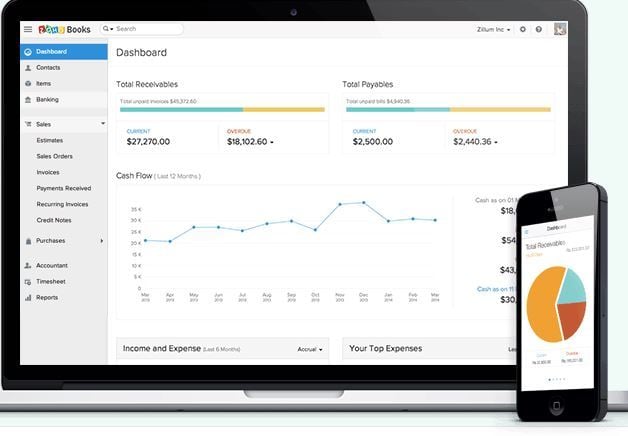
Zoho Books is a comprehensive cloud-based accounting software that offers a wide range of features for managing your finances. It’s a great option for businesses that need a flexible and affordable solution.
Pros:
- Affordable Pricing: Zoho Books is one of the most affordable accounting software options available.
- Comprehensive Features: It offers a wide range of features, including invoicing, expense tracking, financial reporting, and inventory management.
- Scalable Solution: Zoho Books can grow with your business, offering features for businesses of all sizes.
- Mobile App: Manage your finances on the go with the Zoho Books mobile app.
- Excellent Customer Support: Zoho Books offers excellent customer support through phone, email, and live chat.
Cons:
- Learning Curve: Zoho Books can have a steeper learning curve compared to other software options.
- Limited Integrations: Zoho Books has a smaller number of integrations compared to other software options.
5. Wave Accounting:
Wave Accounting is a free accounting software option that’s perfect for small businesses with basic accounting needs. It offers a limited set of features but is an excellent choice for businesses with a tight budget.
Pros:
- Free Plan: Wave Accounting offers a free plan that includes basic accounting features, making it a great option for businesses with a tight budget.
- User-Friendly Interface: Wave Accounting is incredibly easy to use, even for users with limited accounting experience.
- Excellent Invoicing Features: Wave Accounting offers robust invoicing features, including customizable templates, payment tracking, and automatic reminders.
- Mobile App: Manage your finances on the go with the Wave Accounting mobile app.
- Excellent Customer Support: Wave Accounting offers excellent customer support through phone, email, and live chat.
Cons:
- Limited Features: The free plan of Wave Accounting has limited features, and you’ll need to upgrade to a paid plan to access more advanced features.
- Limited Integrations: Wave Accounting has a smaller number of integrations compared to other software options.
Choosing the Right Software:
With so many options available, choosing the right cloud-based accounting software can feel overwhelming. But don’t worry, I’ve got you covered. Here are some key factors to consider when making your decision:
- Your Business Needs: What are your specific accounting requirements? Do you need basic invoicing and expense tracking or more advanced features like inventory management and payroll?
- Budget: How much are you willing to spend on accounting software?
- Ease of Use: How user-friendly is the software? Can you easily navigate the interface and understand the features?
- Integrations: Does the software integrate with other business tools you use?
- Customer Support: What level of customer support does the software provider offer?
Getting Started with Cloud-Based Accounting Software:
Once you’ve chosen the right software, it’s time to get started. Here are some tips for a smooth transition:
- Set Up Your Account: Create an account with the software provider and enter your business information.
- Import Existing Data: If you have existing accounting data, import it into the software.
- Train Your Team: Ensure everyone on your team understands how to use the software.
- Set Up Integrations: Connect the software with other business tools you use.
- Start Using the Software: Start using the software to manage your finances and track your business performance.
Conclusion:
Cloud-based accounting software is a powerful tool that can help small businesses streamline their finances, improve efficiency, and gain valuable insights into their business performance. By understanding your needs, choosing the right software, and implementing it effectively, you can unlock the full potential of cloud-based accounting and take your business to the next level.